
What Probate Covers in Crawford County
Probate is the court process that settles what a person leaves behind and shields people who cannot protect themselves. In Crawford County, the Probate Court handles decedent's estates, which are the assets and debts of someone who has died. It also hears guardianships, conservatorships, name changes, and mental-health commitment matters. Some trust and family-probate crossover work lands here too. The Probate Court shares the county courthouse in Grayling with the circuit and district benches, and estates move through this same track from the first filing to the final accounting.
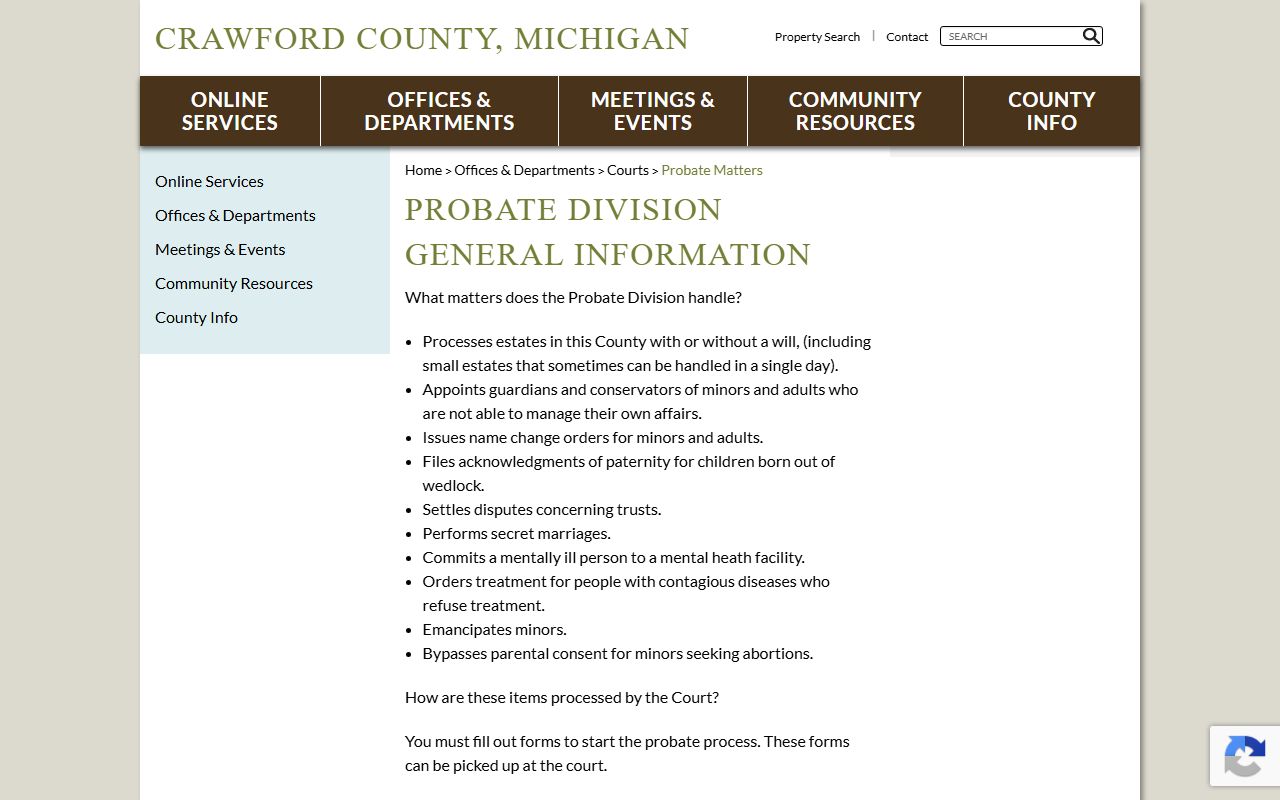
The county explains its probate role on the official Crawford County probate matters page. That page confirms probate is form-driven at the local level and points filers to the courthouse to begin.
Most probate files stay open to the public. A few do not, and that gap matters the moment you start searching. A decedent's estate case, for instance, reads very differently from a mental-health commitment file, even though both may sit in the same court.
How to Open a Crawford County Probate Case
Starting a probate matter here begins with paper. The court asks filers to complete the correct forms, and those forms are picked up in person at the courthouse. Estate cases, guardianship petitions, and conservatorship petitions all follow this same front door. Staff at the probate register can point you to the right packet.
One routing rule stands out. All probate forms except mental-health commitment forms are filed at the Probate Court. Mental-health commitment paperwork follows a separate path, which reflects the extra confidentiality that surrounds those cases. Keep that exception in mind before you drive to the courthouse with a stack of documents.
- Pick up the correct forms at the Probate Court in the Grayling courthouse, or ask the probate register which packet fits your matter.
- Complete every form fully, since incomplete filings slow the case and can force a second trip.
- File the completed forms at the Probate Court, remembering that mental-health commitment forms are the one exception to this filing desk.
- Ask the probate register about the next hearing date and how to appear once the case is open.
Note: The county does not publish a probate fee table in its online materials, so confirm any current filing cost directly with the probate register before you file.
Estates, Guardianships, and Conservatorships
Probate is not one thing. It covers several distinct matters, and each starts a different kind of case. A decedent's estate deals with a person who has died. A guardianship deals with the personal care of someone who cannot make safe decisions. A conservatorship deals with money and property for a person who cannot manage them. Name changes and mental-health commitments round out the docket.
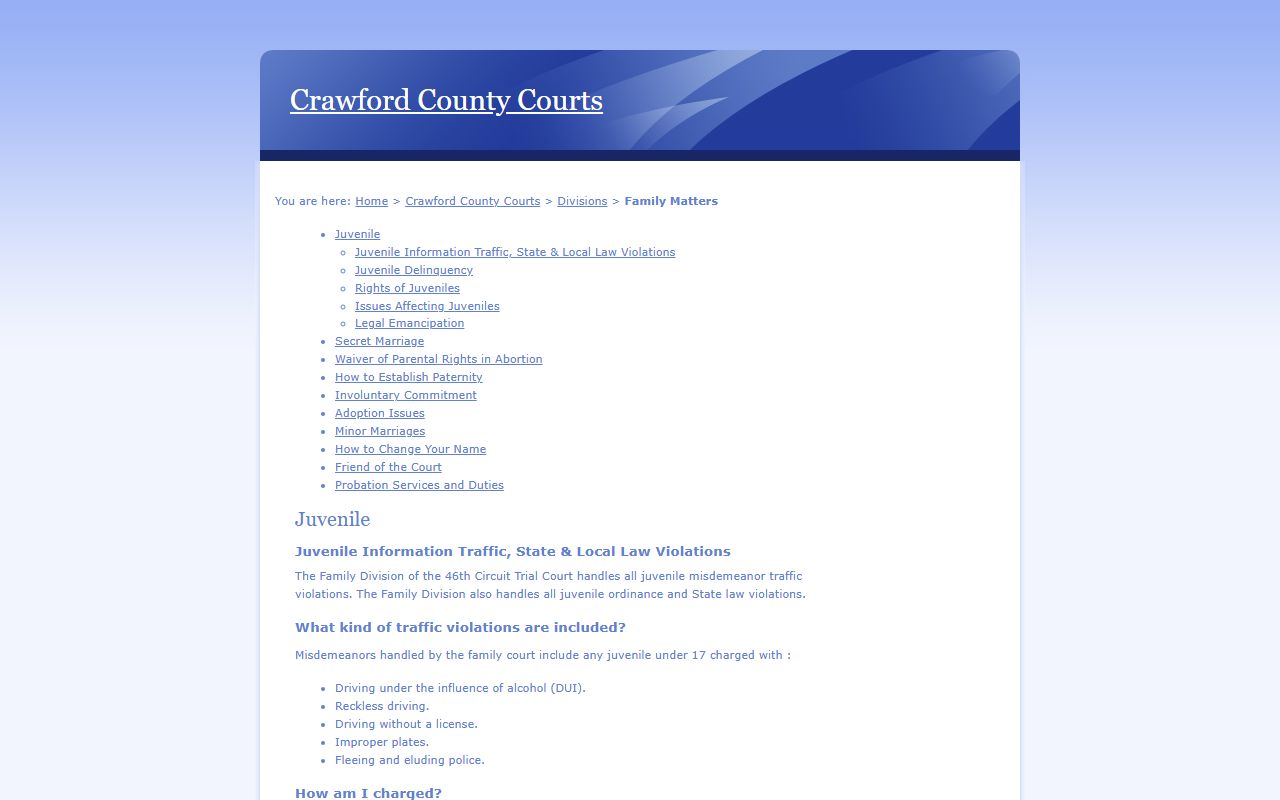
The legacy court site still lays out how these family and probate matters connect. You can review that older breakdown on the Circuit 46 legacy family matters page, which shows how juvenile, adoption, and support work sits alongside probate in the same courthouse network.
The table below sorts the common probate matters by what each covers and where it is filed.
| Matter | What It Covers | Where Filed |
|---|---|---|
| Decedent's estate | Assets, debts, and distribution after a death | Probate Court |
| Guardianship | Personal care for a minor or an incapacitated adult | Probate Court |
| Conservatorship | Money and property for a protected person | Probate Court |
| Name change | A legal change of a person's name | Probate Court |
| Mental-health commitment | Involuntary treatment petitions | Separate filing path, not the standard probate desk |
Probate Terms Defined
Probate filings lean on words that rarely come up in daily life. A short glossary helps you read a file and talk to court staff without guessing. These terms show up across estate, guardianship, and conservatorship cases in Crawford County.
- Testator
- The person who made the will and signed it while alive.
- Executor
- The person named in a will to carry out its terms and settle the estate.
- Personal representative
- The Michigan term for the person who administers an estate, whether or not a will exists.
- Letters of authority
- The court order that gives a personal representative the power to act for the estate.
- Intestate
- Dying without a valid will, which sends the estate through state distribution rules.
- Guardianship
- A court arrangement that lets one person make personal and care decisions for another.
- Conservatorship
- A court arrangement that puts one person in charge of another's money and property.
- Ward
- The protected person whose care or property the court has placed under a guardian or conservator.
How to Search Crawford County Probate Records
The county does not run its own large probate search engine. Instead, it links out to the statewide MiCOURT system for probate case lookups. That platform holds public case information for courts across Michigan, including the Crawford County probate track.
For online searches, the county points to the Crawford County probate case search route on MiCOURT. The broader MiCOURT public case search uses fields such as case number, party name, attorney name, and lower court to narrow results. The portal renders through the browser rather than a simple form page, so give it a moment to load before you type.
When a record is not online, the fallback chain is short and local. Call the probate register for a new or recent matter. For older estate files that were never digitized, or for paper records the portal does not show, file a public-records request with the county. Michigan's open-records law makes disclosure the default unless a specific exemption applies.
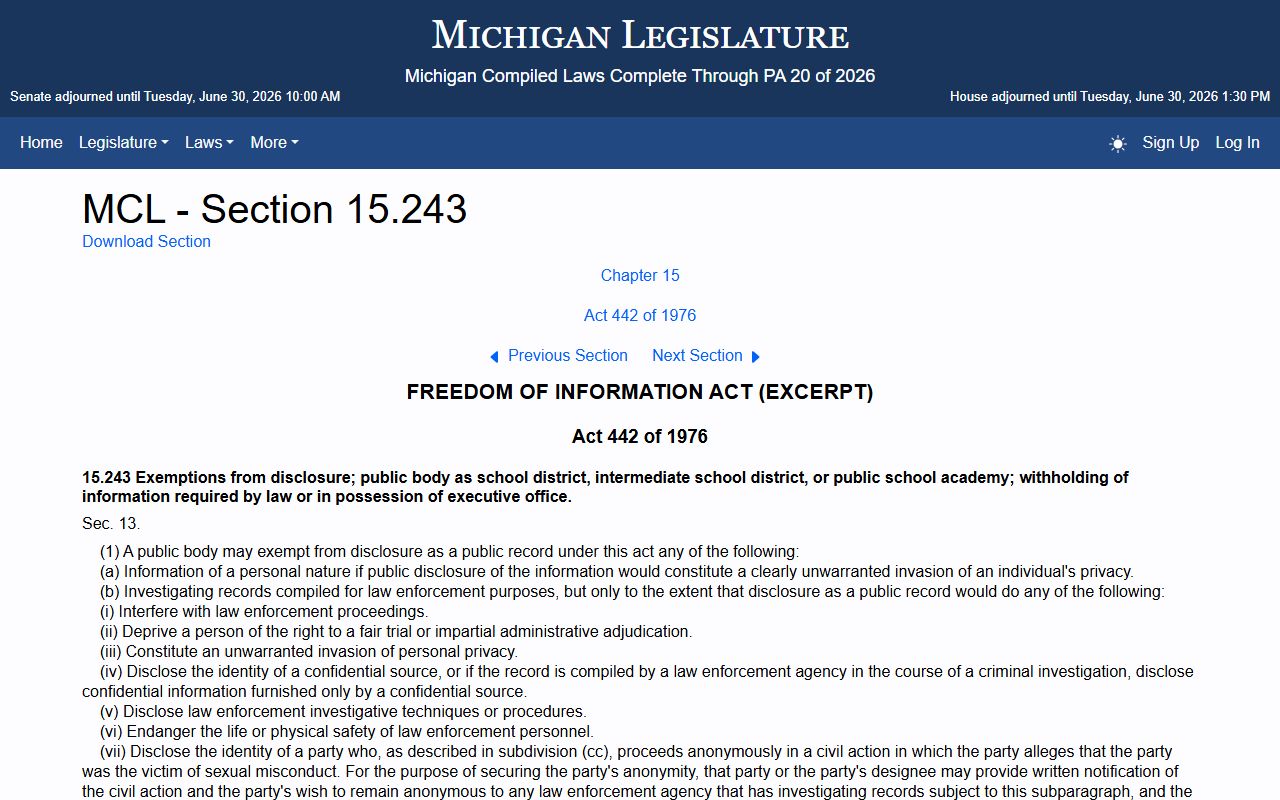
The exemptions that can limit a probate request appear in MCL 15.243, part of the Michigan Freedom of Information Act. A FOIA request cannot force release of files that court rules or statutes keep confidential, but it remains the right tool for public paper records the courthouse still holds on the shelf.
Crawford County Probate Court Contacts
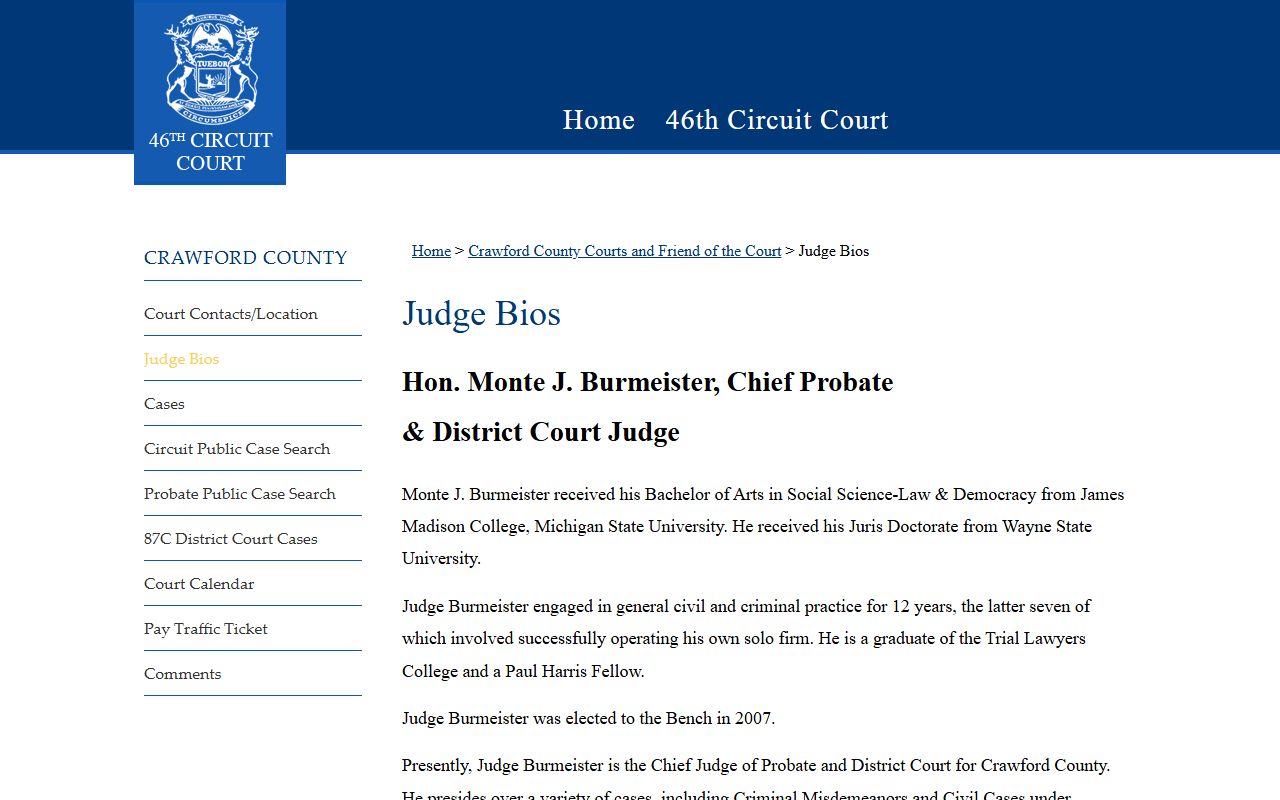
Because the county leans on phone routing more than a self-service portal, the fastest path to a probate answer is often a direct call. The Probate Court and its register sit inside the same Grayling courthouse that houses the circuit and district benches. Hon. Monte J. Burmeister serves as Chief Probate and District Court Judge for the county.
Judge Burmeister's background appears on the Circuit 46 judge bios page, which profiles the bench that serves Crawford County. That page helps confirm which judge is likely to sit on a given probate or family matter.
Crawford County Probate Court / Probate Register
200 W. Michigan Avenue
Grayling, MI 49738
989-344-3237
Fax: 989-344-8529
Mon-Fri 8:00 a.m. to 4:30 p.m.
Family Division
200 W. Michigan Avenue
Grayling, MI 49738
989-344-3239
Mon-Fri 8:00 a.m. to 4:30 p.m.
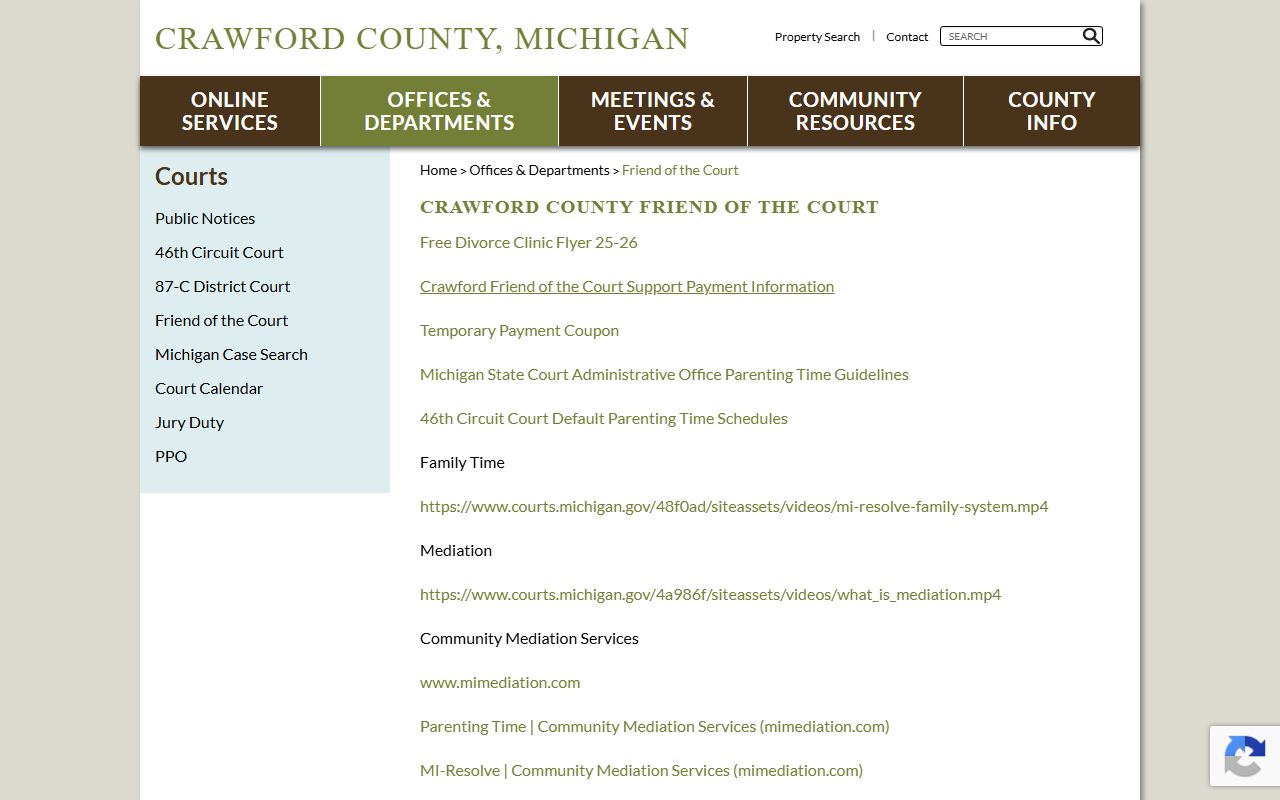
Guardianship, conservatorship, and support work often crosses into the Friend of the Court, which enforces family orders and handles related questions. Its role is outlined on the Crawford County Friend of the Court page.
Friend of the Court
200 W. Michigan Avenue
Grayling, MI 49738
989-344-3272
Mon-Fri 8:00 a.m. to 4:30 p.m.
What Crawford County Probate Records Show
A probate file grows as a case moves. Early filings open the matter, and later documents record what the court decided and how the estate closed. Together they show who died or who needs protection, who was appointed to act, and how assets were handled. The exact mix depends on whether the case is an estate, a guardianship, or a conservatorship.
Common documents and fields you may see in a Crawford County probate record include:
- The will, where a valid one exists
- The petition that opened the estate, guardianship, or conservatorship
- Letters of authority naming the personal representative
- Inventories of estate assets and property
- Accountings that track money in and out of the estate
- Court orders, hearing dates, and closing documents
Marriage and divorce certificates travel a different path through the county, so a spouse tracing a family record may need both the probate file and the vital records held by the Crawford County marriage and divorce records office. Keeping the two straight saves a wasted trip.
Restricted Crawford County Probate Records
Not every probate-adjacent record is open. Some carry confidentiality rules that go well beyond an ordinary estate file, and a public-records request cannot pry them loose. The strongest limits sit around mental health, adoption, and juvenile matters.
Mental-health commitment and treatment records are protected under MCL 330.1748, which is one reason those commitment forms follow a separate filing path from the standard probate desk. Adoption files stay sealed under MCL 710.67 and MCL 710.68, with only limited access for certain parties after an order. Juvenile records fall under MCL 712A.28 and are not treated like ordinary public civil files.
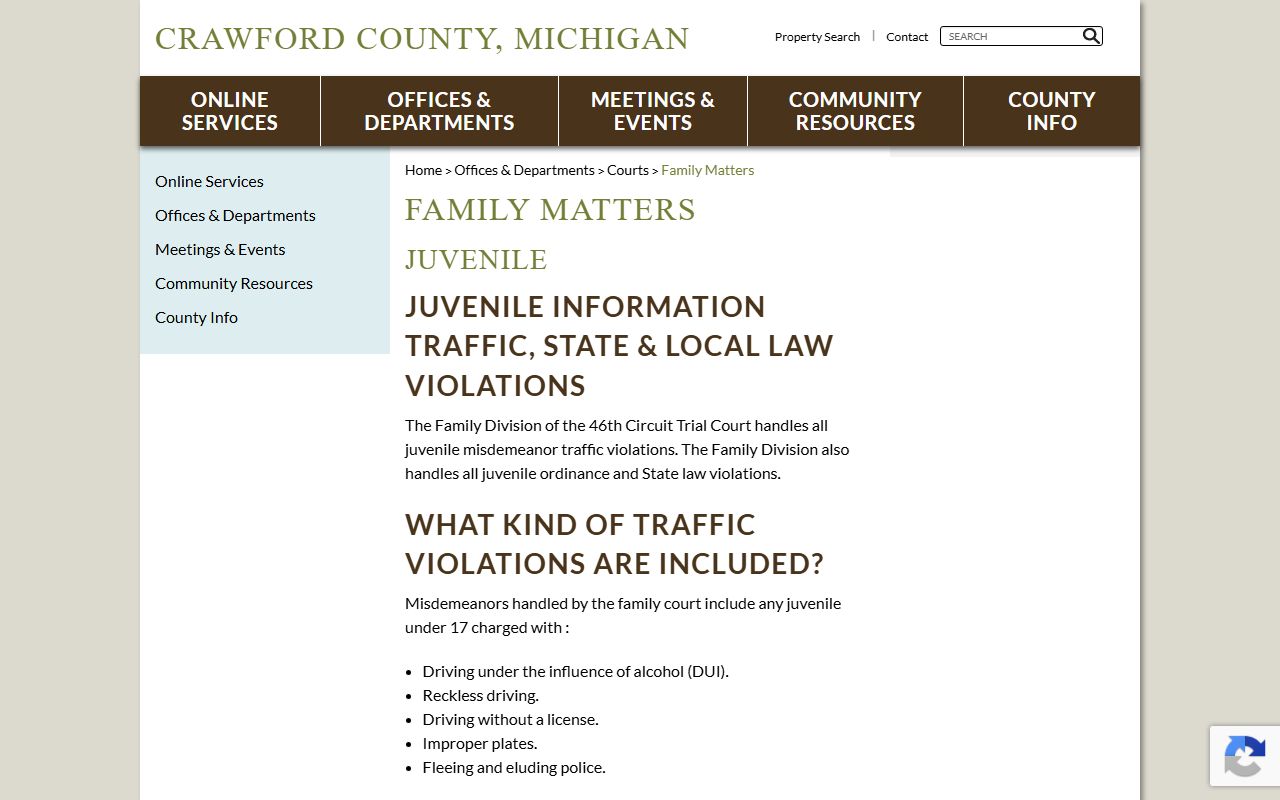
These family and mental-health matters are routed through the family division, as described on the Crawford County family matters page. That page shows how juvenile, adoption, and mental-health hearings are kept separate from open probate business.
For everything else, the county's own record channels usually work. When a probate file is not visible online, staff can tell you whether it is public, and the county Crawford County Clerk of Court and register office can guide a broader records request. Note: A sealed or confidential probate matter stays closed even under a FOIA request, since court rules and state statutes override the general disclosure default.